The landline is solving a problem that stopped being a problem in 2010.
Most boutique and independent hotel operators removed in-room phones years ago, or never installed them. Not because of a technology mandate. Because of math.
The cost doesn’t pencil. The front desk isn’t staffed around the clock. And every guest walked through the door carrying a phone — usually two, if the room has two guests. The landline was solving a problem that stopped being a problem around 2010.
What didn’t change: the system on the operator side.
Skip to what you need:
The phone situation your guests are actually in
According to Pew Research, 98% of Americans own a cell phone. In a standard double-occupancy room, that’s two smartphones on the nightstand before you’ve factored in the landline.
Guests book on their phones. They navigate on their phones. They use their phones to unlock the door, order food, and check out. Hotel Tech Report’s 2025 State of Hotel Guest Technology report found that nearly half of guests use non-phone channels to make requests during their stay — meaning the channels guests are gravitating toward aren’t the in-room phone.
This isn’t surprising. It’s what you’d expect from people who carry internet-connected computers in their pockets.
The in-room phone isn’t getting picked up because guests don’t need it. They already have what they need. The question is whether your team is set up to meet them there.
Why boutique operators cut landlines
For small and independent hotels, the math on maintaining in-room phones is hard to justify. And for properties going through renovation, the savings start before the doors open — no hardware to buy, no in-room wiring, no infrastructure to maintain.
Legacy PBX infrastructure costs a 200-room property between $50,000 and $130,000 in initial setup — hardware, wiring, servers, installation — according to HFTP. Annual maintenance and line fees add another $6,000 to $16,000. Scale that down to a 20-room boutique property and the numbers are smaller, but not small.
Most boutique and independent hotels don’t have a 24/7 staffed front desk either. A phone in every room that rings to an unstaffed desk, at 11pm, when a guest has a question about parking, isn’t solving anything. It’s just hardware on a nightstand.
Operators who’ve made the switch describe the same sequence: they removed the phones, waited for the complaints, and heard nothing. Guests never noticed.
The gap nobody filled
When boutique operators removed in-room phones, they mostly removed the guest-facing hardware. The assumption was that guests would just use their own phones to call the front desk number if they needed something.
That’s true. Guests do call. They also text, email, message through OTA platforms, and show up at the desk.
What most operators didn’t replace was the infrastructure on their end — the system that receives and routes all of that.
The old setup: one front desk phone, one number, one person who answered it — or a forwarded landline ringing to whoever was on duty. Context was informal and lived in someone’s head. Works fine with two staff and fifteen rooms. Gets messy fast as volume or team size grows.
When a guest calls the front desk number, the person who answers knows the room number from caller ID and not much else. No name. No reservation. No history of prior conversations. No visibility into whether a colleague already handled something related. Just a ringing phone.
The phone wasn’t the problem. The fragmented, context-free system behind it was.
What a modern setup looks like
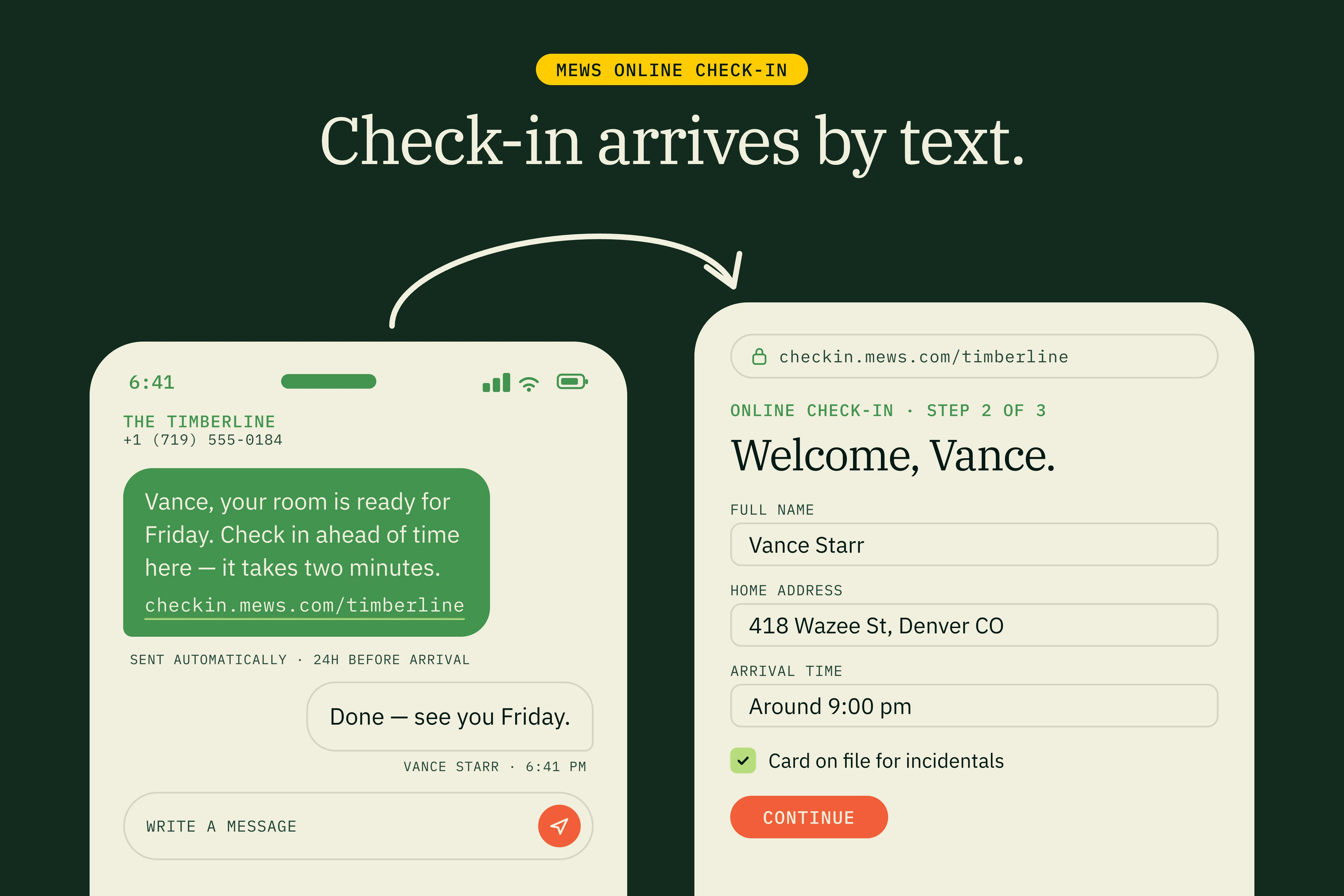
The operators who’ve moved past this aren’t running anything complicated. They’ve replaced the in-room phone and the old front desk PBX with a single number — one that guests call or text from their own phones, handled by the whole team through a shared inbox.
Every call and text comes in through one place. Guest and reservation context is attached automatically. Anyone on the team can see the conversation history. A guest who texted about late checkout at 10pm gets a response from whoever’s available, and that response doesn’t require hunting down what was already said.
The guest experience is unchanged in any way they’d notice — they’re still calling or texting a hotel number from their own phone. What changes is what happens on the other end.
Removing the in-room phone is the easy part. Building a communication system your team can actually run — without a full-time front desk — is what changes operations.
Hello Hotel is built for exactly this: one number for calls, texts, and voicemail, with guest context from your PMS on every conversation. Built for boutique and independent hotels running lean. See how it works →