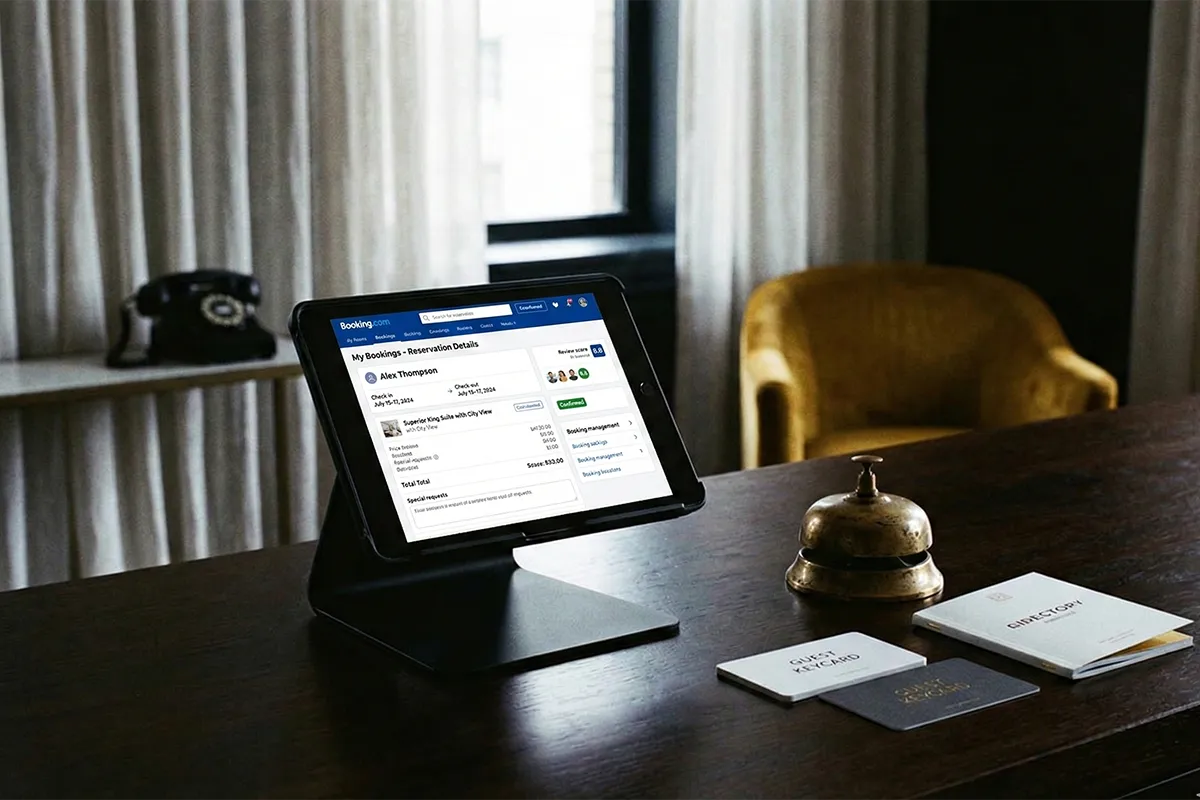
The booking came through Booking.com, so that’s where the conversation happens. It seems logical. It isn’t.
OTA messaging is where most independent hotel operators spend a surprising amount of their communication time — answering pre-arrival questions, handling special requests, following up on issues. And for years, there wasn’t a better option. The guest was in the OTA’s system, so the operator stayed in it too.
The problem isn’t that OTA messaging doesn’t work. It’s that it works just well enough to keep operators from building something better — and the costs of staying in that channel add up in ways that don’t show up on any dashboard.
What OTA messaging actually is
When a guest books through Airbnb, Booking.com, or Expedia, their contact information belongs to the platform. The operator gets a masked email, a platform inbox, and a communication channel governed by the OTA’s rules, design, and notification logic.
That’s not a communication channel. It’s a tenant arrangement. The operator is allowed to communicate with guests inside the platform’s system, on the platform’s terms, for as long as the platform decides to allow it.
Operators don’t own the conversation. They’re borrowing it.
Platform-controlled messaging introduces friction at every stage of the guest experience.
Notification reliability varies. A guest who turns off app notifications, checks their email infrequently, or simply misses a message in a crowded inbox may never see an important update. If check-in instructions don’t land, the operator finds out at 10pm when a frustrated guest calls — if the operator has a number to be called at all.
There’s no way to reach a guest directly when something changes. A late housekeeping delay, a parking situation, an early check-in that opens up — anything time-sensitive has to travel through the OTA’s messaging system, which may or may not deliver it promptly, and which the guest may or may not be monitoring.
And the conversation is capped at checkout. Once the stay ends, the channel closes. There’s no follow-up, no relationship to maintain, and no path to a direct booking the next time that guest wants to visit.
A popular category of hospitality software promises to fix OTA messaging by aggregating it — pulling Airbnb, Booking.com, and Expedia messages into a single interface for the operator team. It’s a real improvement for internal operations. It doesn’t help the guest at all.
The guest is still communicating through the OTA. The messages they receive are still platform-generated, platform-branded, and platform-timed. Many of these tools send a high volume of automated emails — pre-arrival reminders, check-in instructions, review requests — that operators can’t fully customize and guests can’t easily distinguish from OTA noise. Open rates drop. Guests learn to ignore them.
Unified inbox tools make it easier to manage OTA conversations. They don’t get operators out of the OTA channel. That’s a different problem, and it requires a different solution.
The real goal: get out of the channel entirely
The most effective shift an independent hotel operator can make isn’t finding a better way to use OTA messaging. It’s replacing it as early in the guest journey as possible.
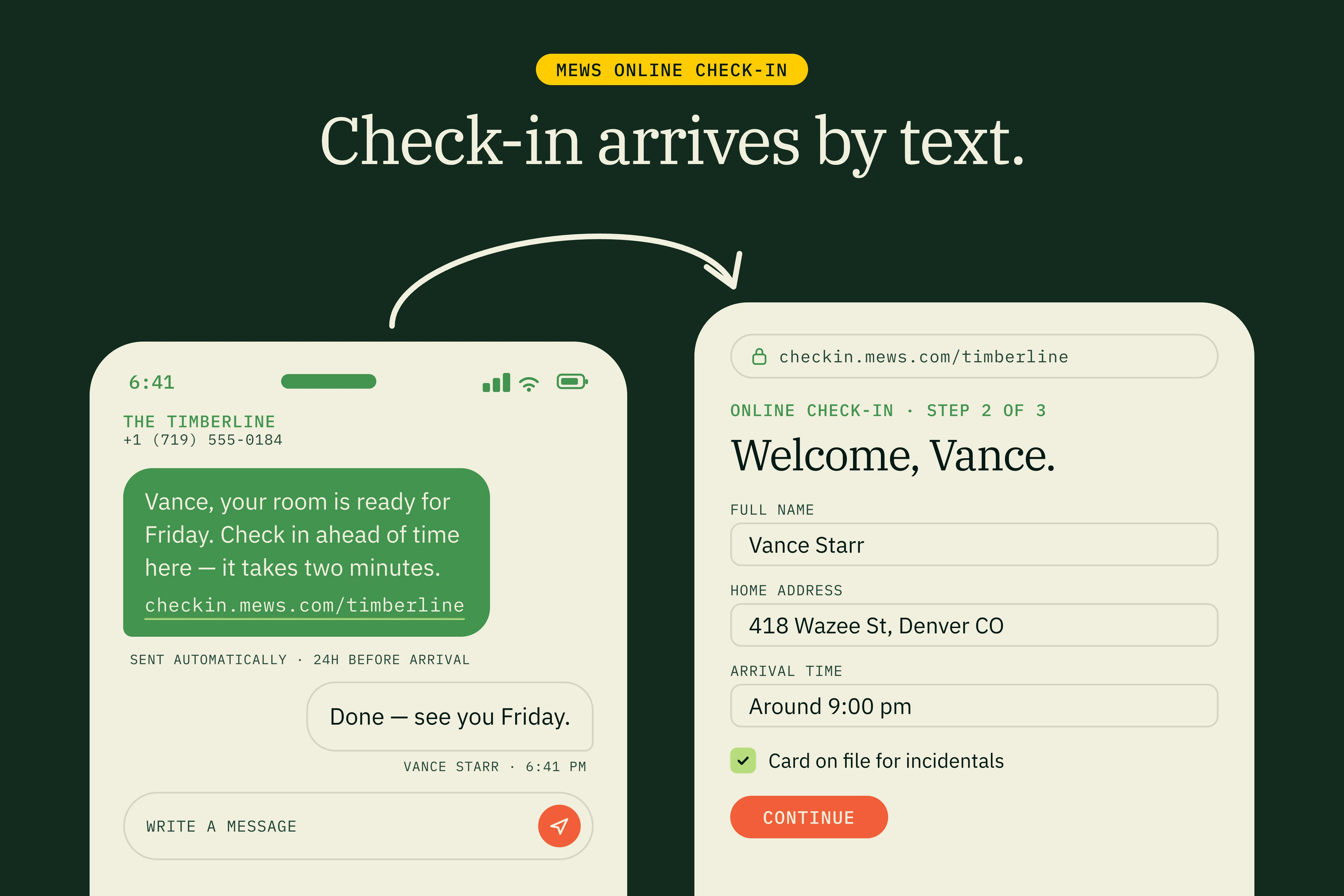
Most guests will share a phone number if asked. A simple pre-arrival message — sent via text rather than a platform inbox — moves the conversation into a channel the operator controls. From there, the operator can collect a real email address, replace masked OTA contact details with actual guest information, and build a relationship that doesn’t disappear when the stay ends.
Text messages reach people. They aren’t filtered into promotional tabs, buried in notification centers, or confused with OTA marketing. A guest who receives a text from the property number knows exactly who it’s from and how to respond.
URLs sent via text aren’t scraped by OTA platforms. Check-in links, local guides, add-on offers — anything the operator wants to share travels cleanly, without the restrictions that apply inside OTA messaging systems.
What a channel you own looks like
A direct communication channel for a hotel doesn’t have to be complicated. The fundamentals are straightforward: one number guests can call or text, a shared inbox for the team, and a way to carry guest context — name, reservation details, prior conversations — into every interaction.
What that gives an operator is different in kind from what an OTA inbox gives them. Real contact information that belongs to the property. Conversations that persist across stays and build over time. The ability to reach a guest directly when something matters. A relationship the OTA can’t revoke.
For independent hotels trying to build a sustainable direct booking base, that relationship is one of the most valuable assets on the property. OTA messaging doesn’t build it. It actively prevents it.
Hello Hotel gives independent hotels one number for calls, texts, and voicemail — with routing rules and guest context from the PMS on every conversation. Book a demo →